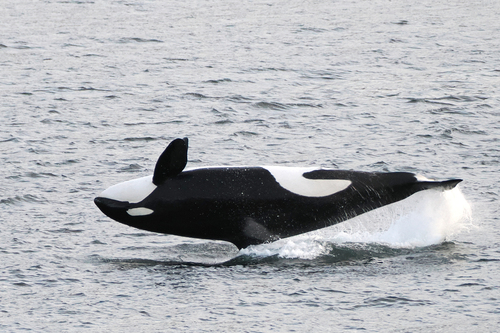
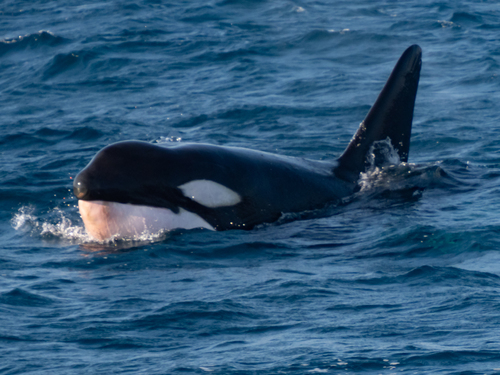
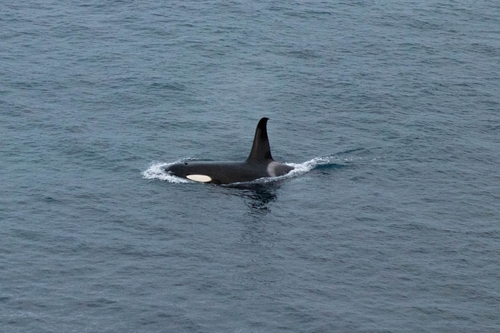
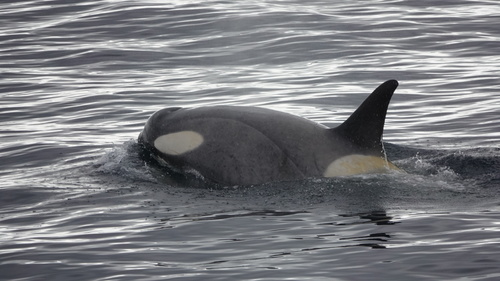
The largest dolphin and the ocean’s top predator, found in every ocean. Orcas live in family groups led by old females, speak in family dialects and pass on hunting traditions so different that populations living side by side never mix.

FamilyDelphinidae
Lives inEvery ocean
IUCN statusData Deficient
DietFish to whales
ORCAS AT A GLANCE

The orca (Orcinus orca) is the largest member of the dolphin family, with males reaching about 8 to 9 m. It lives in all oceans, from the poles to the tropics. Orcas form stable family groups led by older females, and different populations, called ecotypes, specialise in different prey and have distinct calls and cultures. As a single species it is listed as Data Deficient, but some populations, like the southern residents, are endangered.

Figures graded and sourced in the fact sheet below.
KEY DISCOVERIES
1970sPhoto-ID beginsMichael Bigg shows each orca can be identified by its fin and saddle patch.
1998Two kinds, same seaFish-eating "residents" and mammal-eating "Bigg’s" orcas off Canada are shown never to interbreed.
2012Why menopauseOlder mothers boost the survival of adult sons (Foster et al.).
2018TahlequahA southern resident mother carries her dead calf for 17 days, about 1,600 km.
2020Boat encountersIberian orcas begin ramming sailing-boat rudders, a new behaviour spreading in one small group.
2024A new species?Researchers propose splitting resident and Bigg’s orcas into separate species (Morin et al.).
ONLY IN THE ORCA

What makes the orca unlike any other animal?

Short answer: It combines a human-like life history with cultures that split one species into separate societies.

01Menopause, like usFemales stop breeding in their 30s or 40s but can live into their 80s or beyond. Only a few toothed whales and humans are known to do this.Croft et al. 2017
02Family dialectsEach family group has its own set of calls, learned from relatives, and the calls differ even between groups that share the same waters.Ford 1991
03Sons that never leaveIn resident populations, both sons and daughters stay with their mother for life, which is rare among mammals.Bigg et al. 1990
04Cultures that split a speciesFish-eaters and mammal-eaters in the same sea do not mix or breed, and may be becoming separate species.Morin et al. 2024
05Wave-washingAntarctic orcas swim in line to make a wave that sweeps seals off ice floes.Pitman & Durban 2012
06Hunts the largest animalOrcas off Australia were recorded killing three blue whales, one an adult, the first confirmed cases.Totterdell et al. 2022
FACT SHEET

How big and how old do orcas get?

Short answer: Males reach about 9 m and well over 6 tonnes. Females can live into their 80s or longer, decades past their last calf.

MeasuredEstimatedQuoted, unverified
Length, adult malesMeasuredup to ~9 mMales6 to 9 mFemales5 to 7 mMales also grow a dorsal fin up to 1.8 m tall
Weight, malesMeasuredup to ~10 tTypical male6 t+Female~3 to 4 tLargest member of the dolphin family
Top speedEstimated~45 km/hBurst~45 km/hCruising~10 km/hShort bursts; estimates vary
Oldest femaleEstimated~80 to 90+ yearsOldest females80 to 90+Oldest males~50 to 60Age estimates from long-term photo-ID. "Granny" (J2) was estimated at over 100, which is uncertain
PregnancyMeasured~17 monthsOrca~17 moHuman9 moAmong the longest of any whale. Calves every 3 to 10 years
Southern residentsMeasured~73 animals2024 count~731995 peak98Endangered population off Washington and British Columbia. Center for Whale Research
Dive depthMeasured~1,000 mDeepest recorded~1,000 mTypical< 100 mTag data; most dives are shallow
Kills humans in the wildQuoted, unverifiedn/aThere is no confirmed fatal attack on a person by a wild orca. Deaths have occurred only in captivity.Common fear
Is a whaleQuoted, unverifiedn/aOrcas are toothed whales but belong to the dolphin family, Delphinidae. "Killer whale" comes from old sailors’ "whale killer".Name confusion
ECOTYPES

Are all orcas the same?

Short answer: No. Around ten ecotypes differ in prey, shape, calls and behaviour. Some may be separate species.

ResidentsNorth PacificSalmon, especially ChinookLarge stable families; noisy, chatty hunters.
Bigg’s (transients)North PacificSeals, sea lions, porpoises, whalesSmall groups; hunt silently so prey cannot hear them.
OffshoresNorth Pacific, open oceanSharks, including sleeper sharksTeeth worn flat by shark skin.
Type AAntarcticMinke whalesThe "typical" orca shape.
Type BAntarcticSeals on ice floes; some eat penguinsFamous for wave-washing.
Type CAntarcticAntarctic toothfishSmallest known orcas, with a slanted eye patch.
Ecotype descriptions after Ford et al. 1998 and Pitman & Ensor 2003. Classification is still under review.
HUNTING

How do orcas hunt?

Short answer: As a team, with methods taught by elders. Each population has its own techniques for its own prey.

Wave-washingAntarctic seals knocked off ice by a group-made wave.
Carousel feedingNorwegian orcas herd herring into a ball, then stun them with tail slaps.
BeachingIn Patagonia and the Crozet Islands, orcas surge onto beaches to grab sea lion pups.
Silent stalkingBigg’s orcas stay quiet so seals cannot hear them coming.
Shark flippingSome hold sharks upside down, which makes them go still.
Compare: Great White Shark vs Orca →
FAMILY

Who leads an orca family?

Short answer: The oldest females. Post-menopausal grandmothers lead the group to salmon in hard years, and their deaths lower the survival of their adult offspring.

A resident matrilineGrandmotherLeads; knows where salmon are in lean yearsAdult daughtersStay for life; raise calves within the groupAdult sonsStay for life; fed and protected by motherGrandchildrenLearn calls and routes from the family
Grandmother effectCalves whose grandmother has died are more likely to die themselves.
Mothers and sonsAn adult male’s risk of death rises sharply in the year after his mother dies.
Food sharingResidents share salmon, often splitting fish between relatives.
Grief-like behaviourMothers have carried dead calves for days. What they experience is unknown.
DIALECTS

Do orcas have language?

Short answer: Not language as we know it, but families have their own learned call sets, and related families share similar dialects.

ClicksFor echolocation: finding fish and reading the seabed.
WhistlesMostly used close up, during social moments.
Pulsed callsThe family dialect: discrete calls repeated and passed down.
Captive orcas have been shown to copy human words and other orcas’ calls (Abramson et al. 2018).
EVOLUTION

Is an orca a whale or a dolphin?

Short answer: Both. All dolphins are toothed whales, and the orca is the largest dolphin.

Baleen whalesMysticeti: blue, humpback, minkeSperm and beaked whalesDeep-diving toothed whalesPorpoises, belugas, narwhalsOther toothed whalesOrcaOrcinus orca, largest dolphinToothed whalesDolphin family, DelphinidaeIts closest relatives include pilot whales and false killer whales
Relationships only, not to time scale.
CAPTIVITY

Should orcas be kept in captivity?

Short answer: Most scientists say no. Captive orcas live shorter lives on average, and many show stress behaviours such as collapsed fins and tooth damage from chewing tanks.

Collapsed finsMost captive adult males have a bent dorsal fin; it is rare in the wild.
Worn teethMany captive orcas grind their teeth on tank walls.
Changing lawsCanada banned keeping cetaceans in 2019; SeaWorld ended its orca breeding in 2016.
THREATS AND CONSERVATION

Are orcas endangered?

Short answer: The species is Data Deficient, but some populations are in trouble: southern residents are endangered, and some European groups are close to vanishing.

Endangered register →
Pollution (PCBs)HIGHToxic chemicals build up in orcas and may cause infertility; females pass them to first calves.
Prey shortageHIGHSouthern residents depend on Chinook salmon, which have declined.
Noise and boatsMEDIUMEngine noise drowns out echolocation and calls.
Entanglement and conflictWATCHCaught in fishing gear or shot by fishermen in some regions.
PCB bansBanned in most countries since the 1970s to 2000s, though they persist in the sea.
Salmon recoveryDam removals and habitat work aim to restore Chinook runs.
Quiet zonesSpeed limits and no-go zones for boats near southern residents.
Long-term photo-IDDecades of individual records make orcas one of the best-known whales.
MYTH OR FACT

Six orca claims, checked

3Myths1Half true2Facts
01MYTH“Orcas are whales, not dolphins.”WHERE IT CAME FROMThe name "killer whale".
WHAT THE EVIDENCE SAYSOrcas are toothed whales inside the dolphin family. Both statements are true at once.
WHAT IS TRUE INSTEADThe largest dolphin.Sources: see list below
02MYTH“Wild orcas attack people.”WHERE IT CAME FROMTheir predator reputation and captive incidents.
WHAT THE EVIDENCE SAYSNo confirmed fatal attack by a wild orca on a person has been recorded.
WHAT IS TRUE INSTEADDeaths have happened only in captivity.Sources: see list below
03HALF TRUE“Orcas are attacking boats for revenge.”WHERE IT CAME FROMIberian rudder-ramming since 2020.
WHAT THE EVIDENCE SAYSThe behaviour is real, but motive is unknown. Play, a learned fad, or a reaction to a past injury have all been proposed.
WHAT IS TRUE INSTEADA spreading behaviour in one small population; motive unproven.Sources: see list below
04FACT“Orcas go through menopause.”WHERE IT CAME FROMDecades of photo-ID records.
WHAT THE EVIDENCE SAYSFemales stop breeding around 40 and can live decades longer, helping their families.
WHAT IS TRUE INSTEADOne of very few mammals with menopause.Sources: 02
05MYTH“All orcas eat seals.”WHERE IT CAME FROMFamous footage of seal hunts.
WHAT THE EVIDENCE SAYSResident orcas eat almost only fish and ignore seals swimming nearby.
WHAT IS TRUE INSTEADDiet depends on the ecotype.Sources: 05
06FACT“Orcas hunt great white sharks.”WHERE IT CAME FROMOff South Africa since 2017.
WHAT THE EVIDENCE SAYSA pair has killed great whites and eaten their livers; sharks abandon the area afterwards.
WHAT IS TRUE INSTEADConfirmed by carcasses and drone footage.Sources: see list below

OPEN QUESTIONS

What science still doesn’t know

?How many species?Whether orcas are one species or several is still being decided.
?Why menopause?Grandmother help explains part of it; why it evolved in so few species is debated.
?Why ram boats?The Iberian behaviour’s cause is unknown.
?How many orcas?There is no reliable global count; estimates start around 50,000.
?What do calls mean?Dialects are mapped, but what individual calls communicate is not.
?How do cultures start?How new hunting traditions arise and spread is barely understood.
FAQ

Frequently asked questions

Is an orca a whale or a dolphin?+

Both: it is a toothed whale in the dolphin family, and the largest dolphin.

Why are orcas called killer whales?+

Sailors once called them "whale killers" for attacking larger whales; the name was later reversed.

How long do orcas live?+

Wild females often live 50 to 80 years or more; males usually 30 to 50. Captive orcas tend to die younger.

What eats orcas?+

Nothing preys on adult orcas. They are apex predators.

Are orcas dangerous to humans?+

Wild orcas have no confirmed record of killing a person.

How many orcas are there?+

There is no exact count. A rough global estimate is at least 50,000.

COMPARE AND EXPLORE

How does it compare with other top predators?

HOW WE KNOW

Sources and how we check

This page is written by Strange Animals and checked against primary research. Every figure carries a grade and a numbered source.

Cite this pageStrange Animals. (2026, November 13). Orca (Orcinus orca): ecotypes, hunting, family and dialects. https://strangeanimals.info/mammals/marine-mammals/orca
  1. 01Bigg, M. A. et al. Social organization and genealogy of resident killer whales. Report of the IWC, Special Issue 121990
  2. 02Croft, D. P. et al. Reproductive conflict and the evolution of menopause in killer whales. Current Biology 27: 298-3042017
  3. 03Foster, E. A. et al. Adaptive prolonged postreproductive life span in killer whales. Science 337: 13132012
  4. 04Ford, J. K. B. Vocal traditions among resident killer whales. Canadian Journal of Zoology 691991
  5. 05Ford, J. K. B. et al. Dietary specialization in two sympatric populations of killer whales. Canadian Journal of Zoology 761998
  6. 06Pitman, R. L. and Ensor, P. Three forms of killer whales in Antarctic waters. Journal of Cetacean Research and Management 52003
  7. 07Pitman, R. L. and Durban, J. W. Cooperative hunting behavior, prey selectivity and prey handling by pack ice killer whales. Marine Mammal Science 282012
  8. 08Totterdell, J. A. et al. The first three records of killer whales killing and eating blue whales. Marine Mammal Science 382022
  9. 09Morin, P. A. et al. Revised taxonomy of eastern North Pacific killer whales. Royal Society Open Science 112024
  10. 10Abramson, J. Z. et al. Imitation of novel conspecific and human speech sounds in the killer whale. Proceedings of the Royal Society B 2852018
  11. 11Center for Whale Research Southern resident killer whale population census. CWR2024
  12. 12Reeves, R. et al. (IUCN) Orcinus orca. IUCN Red List. Data Deficient2017
  13. 13Towner, A. V. et al. Fear at the top: killer whale predation drives white shark absence. African Journal of Marine Science 442022
  14. 14Esteban, R. et al. Killer whales of the Strait of Gibraltar, an endangered subpopulation showing a disruptive behavior. Marine Mammal Science2022
WATCH

Three films worth your time

ClipBBC Earth · Frozen Planet IIIncredible Orca HuntA pod makes waves to wash seals off ice; only about 100 orcas use this technique.Pairs with: Hunting →
ClipBBCKiller whales use new hunting technique to kill blue whaleA pod works together to hunt a blue whale, the largest animal on Earth.Pairs with: Ecotypes →
CompilationBBC EarthAmazing Orca MomentsCoordinated hunts on sea lions and other prey from several series.Pairs with: Family →
PHOTOS

In pictures

Orca
Photo: steve b, CC0, via iNaturalist
Orca
Photo: William Stephens, CC BY 4.0, via iNaturalist
Orca
Photo: Niko Ioannidis, CC BY 4.0, via iNaturalist
Orca
Photo: Stephanie Dolrenry, CC BY-SA 4.0, via iNaturalist
LISTEN

Hear it

Resident orcas recorded by hydrophone in Glacier Bay, Alaska
Recording by National Park Service, Public domain, via Wikimedia Commons.
SIGHTINGS

Where it has been recorded

Map of recorded Orcinus orca occurrences, western hemisphereMap of recorded Orcinus orca occurrences, eastern hemisphere
Each dot marks a georeferenced sighting or specimen record of Orcinus orca, from 43,345 records shared through GBIF.org.
WHERE TO SEE ONE

Where are orcas seen most?

Protected areas with the most research-grade sightings on iNaturalist, out of 11,160 worldwide. Bars show sightings by month.

CONSERVATION TIMELINE

How it came to be protected

  1. 1972US protection law passedThe US Congress passed the Marine Mammal Protection Act, which protects orcas from harassment and killing.Source: Wikipedia
  2. 1979Covered by CITESOrcas came under CITES Appendix II when all cetaceans were listed, effective 28 June 1979.Source: CITES
  3. 2001Endangered in CanadaCanada's COSEWIC designated the southern resident orca population endangered.Source: Government of Canada
  4. 2004AT1 pod declared depletedNOAA Fisheries designated the AT1 Transient stock in Alaska as depleted under the Marine Mammal Protection Act.Source: NOAA Fisheries
  5. 2005Listed as EndangeredNOAA Fisheries listed the southern resident orcas as Endangered under the US Endangered Species Act.Source: NOAA Fisheries
  6. 2006Critical habitat setNOAA Fisheries designated the inland waters of Washington State as critical habitat for southern residents.Source: NOAA Fisheries
  7. 2008Moved to Data DeficientThe IUCN changed the orca's status from Conservation Dependent to Data Deficient.Source: Wikipedia
  8. 2019Canada bans captivityThe Parliament of Canada passed a law banning the keeping and breeding of cetaceans in captivity.Source: Wikipedia
QUIZ

Test yourself

About how long does an orca pregnancy last?

How do Antarctic orcas sweep seals off ice floes?

How tall can the dorsal fin of an adult male orca grow?

SPECIES PROFILES

More species profiles

All profiles →

All orca articles

4 articles