 Strange Animals
Full episodeNat Geo Animals · America the WildGrizzly vs. Polar BearA rare face-off between the two bears, and why their ranges now overlap.Pairs with: Compare →
By Strange Animals · Updated 12 Nov 2026 · 14 sources
The largest land carnivore that barely lives on land. Polar bears hunt seals from the surface of the frozen Arctic Ocean, so the fate of the species is tied, almost one to one, to the fate of the sea ice.
FamilyUrsidae
Lives inArctic sea ice
IUCN statusVulnerable
DietMostly seals
POLAR BEAR AT A GLANCE
The polar bear (Ursus maritimus) is the largest living land carnivore and the only bear classed as a marine mammal. It lives on Arctic sea ice across Canada, Greenland, Norway, Russia and the United States, hunting mainly ringed and bearded seals. An estimated 22,000 to 31,000 remain in 19 subpopulations, and the IUCN lists the species as Vulnerable because of sea-ice loss.
Figures graded and sourced in the fact sheet below.WHAT’S NEWLatest five
30 Oct 2026CanadaA polar bear’s arrival in a Manitoba town prompts safety concerns, and a conservation opportunity.Global News ↗30 Oct 2026CoexistenceDrones, AI “bear-vision” and bear-proof bins rolled out for Polar Bear Week.Polar Bears International ↗15 Jul 2026Canada“Bear-dar” radar aims to give Arctic communities a heads-up on nearby polar bears.Mongabay ↗19 May 2026NorwayH5N5 bird flu is confirmed in a polar bear found dead on Svalbard, the first case in Europe.Governor of Svalbard ↗30 Jan 2026NorwaySvalbard’s bears are getting fatter and healthier despite rapid sea-ice loss.CNN ↗ONLY IN THE POLAR BEAR
What makes the polar bear unlike any other animal?
01The only marine bearIt is the only bear treated as a marine mammal, because it depends on sea ice and hunts seals at sea.US Marine Mammal Protection Act
02Clear hair, black skinIts fur is not white: each guard hair is hollow and transparent and scatters light, over black skin.Koon 1998
03Grip pads on the feetPaws up to about 30 cm wide, with fur and small bumps on the soles to grip ice.Stirling 2011
04Only pregnant females denMost polar bears stay active all winter. Only pregnant females dig a snow den, where they give birth.Amstrup 2003
05Hybrids in the wildWild polar-grizzly hybrids were confirmed in 2006 as the two species meet more often.Pongracz et al. 2017
06The most carnivorous bearIts diet is mostly seal blubber; other bears eat large amounts of plants.Thiemann et al. 2008
FACT SHEET
How big is a polar bear, and how many are left?
Short answer: Adult males weigh 350 to 700 kg, females 150 to 250 kg. An estimated 22,000 to 31,000 live in the wild.
MeasuredEstimatedQuoted, unverified
Adult male weightMeasured350 to 700 kgAdult human0200400600800 kgCapture studies; heaviest after spring seal hunting
Adult female weightMeasured150 to 250 kgPregnant, before denning0200400600800 kgPregnant females can roughly double their weight before entering a den
Nose to tail, malesMeasured2.0 to 2.5 mHuman height01 m2 m3 mMales are about twice the mass of females
Longest tracked swimMeasured687 kmFemale, Beaufort Sea687 kmEnglish Channel34 kmGPS collar, 9 days nonstop in 2008. Durner et al., Polar Biology 2011
Wild populationEstimated22,000 to 31,000Each dot ≈ 1,000 bears. Pale dots show the uncertainty.IUCN Red List assessment, 2015
SubpopulationsMeasured19Many have never been fully surveyed, especially in Russia.IUCN/SSC Polar Bear Specialist Group
Longest fastEstimatedup to 8 monthsJASONDJFMAMJPregnant females, from coming ashore in summer to spring emergence from the den, nursing without eating
Smell a seal 32 km awayQuoted, unverified32 kmWidely repeated, never measured. Their sense of smell is excellent, but no study supports this distance.Popular claim; no peer-reviewed source
Running speedEstimatedabout 40 km/h01020304050 km/hShort bursts only; they overheat quickly. See our speed article
ORIGINS AND FAMILY TREE
Where did polar bears come from?
Short answer: From brown bears. Polar bears are a young species that split from brown bear ancestors, and the two can still interbreed.
ClassMammalia→OrderCarnivora→FamilyUrsidae→GenusUrsus→SpeciesU. maritimus
The bear family treePolar bear lineExtinct †Time axis is logarithmic
Branch dates are approximate, from molecular studies of living and fossil bears. The time axis is stretched toward the present so the recent polar bear split is visible.When did they split from brown bears? Scientists disagree.Genetic studies give answers that differ by ten times, depending on which DNA they read and how they model interbreeding.
Miller et al. 2012 PNAS4 to 5 million years
Hailer et al. 2012 Scienceabout 600,000 years
Liu et al. 2014 Cell343,000 to 479,000 years
Today1 My2 My3 My4 My5 My agoAll three are peer-reviewed. Most recent work favours a split within the last million years.Oldest fossilA jawbone from Svalbard, about 110,000 to 130,000 years old, already shows polar bear features (Lindqvist et al. 2010).
Hybrids exist"Pizzly" or "grolar" bears have been confirmed in the wild in the Canadian Arctic, as grizzlies move north.
Brown bears carry polar bear DNABrown bears on Alaska’s ABC Islands carry polar bear ancestry from past interbreeding.
A marine mammalUS law classes it with whales and seals, because it depends on the ocean for food.
BUILT FOR COLD
How does a polar bear stay warm?
Short answer: Four layers: water-shedding guard hairs, dense underfur, black skin and a thick layer of blubber.
Cross-section of the coat and skinSchematic, not to scale. The hairs are not "fibre-optic" tubes that pipe light to the skin; that idea has been tested and rejected.
Guard hairsTransparent, hollow-cored hairs that shed water and scatter light, so the coat looks white
UnderfurDense, woolly layer that traps air
Black skinAbsorbs heat that reaches it
BlubberUp to about 10 cm thick: insulation and an energy store
Huge pawsUp to about 30 cm across. They spread weight on thin ice and paddle like oars; small bumps on the pads grip the ice.
Short, curved clawsHook into ice and haul seals out of the water.
Long skull and neckA narrower head than a brown bear’s, for reaching into seal breathing holes.
Sharp, jagged teethMore meat-shearing than other bears, suited to a diet of fat and flesh.
Small ears and tailLess surface to lose heat.
Overheats easilySo well insulated that running hard makes it overheat, which is why it stalks rather than chases.
A YEAR ON THE ICE
What does a polar bear do all year?
Short answer: It feasts on seals in spring, fasts on land in summer, and pregnant females spend winter in snow dens. Example: Western Hudson Bay. Tap a month.
On the ice, huntingIce forming or breakingOn land, fastingBar height: relative ice cover
Apr
Dates shift every year and differ between subpopulations. Ice-free seasons in Western Hudson Bay have lengthened by weeks since the 1980s.Feast seasonSeal pups are born in snow lairs. Bears eat most of the year’s food now.Pregnant females: hunting hard to recover
LIFE CYCLE
How do polar bears raise their cubs?
Short answer: In a snow den. Mothers give birth in mid-winter, fast for months while nursing, and keep cubs for about two and a half years.
Apr to Jun1MatingMales track females across the ice by scent. The fertilised egg pauses before implanting, so a thin female may not carry a pregnancy.
Oct to Nov2Den diggingPregnant females dig a den in a snowdrift, usually on land, and stay inside for months.
Dec to Jan3BirthUsually twins, each about 0.6 kg, blind and nearly hairless, born in the darkest part of winter.
Mar to Apr4EmergenceCubs leave the den at around 10 to 15 kg and walk with their mother to the sea ice.
Year 1 to 25Learning to huntCubs nurse and learn seal hunting by watching. Their survival depends heavily on ice conditions.
~2.5 years6IndependenceMothers usually breed only every three years, one of the slowest reproductive rates of any mammal.
HUNTING AND DIET
How does a polar bear hunt?
Short answer: Mostly by waiting at seal breathing holes on the sea ice. It eats the blubber first, the richest energy source in the Arctic.
MOST USEDStill-huntingThe most common method. The bear waits motionless beside a seal’s breathing hole, sometimes for hours, then strikes when the seal surfaces.
StalkingCreeps across the ice toward a seal resting beside a hole, freezing whenever it lifts its head.
Aquatic stalkSwims up through open-water channels and surfaces at the ice edge beside the seal.
Lair raidsIn spring, smashes through snow roofs into seal birth lairs to catch pups.
What it eats
Ringed sealMain prey across the Arctic
Bearded sealLarger, important in some regions
Walrus calvesOccasional, and risky
BelugaRare, when trapped in ice
On land in summer it eats little: bird eggs, carcasses and kelp cannot replace seal fat. Arctic foxes often follow bears to scavenge leftovers. More in What do polar bears eat.RANGE
Open in Animal Map →Where do polar bears live?
Short answer: Around the Arctic Ocean, in five countries. Canada holds most of them.
CanadaAbout two-thirds of all polar bearsHudson Bay, the Arctic Archipelago and Baffin Bay
Greenland (Denmark)East and west coastsShares subpopulations with Canada
RussiaKara, Laptev and Chukchi seasLarge areas poorly surveyed
United StatesAlaska: Southern Beaufort and Chukchi seasThe Southern Beaufort population fell by about 40% in the 2000s
NorwaySvalbard and the Barents SeaFatter and healthier in recent studies despite ice loss
Bar widths show approximate share of the world population (Estimated). All five countries signed the 1973 Agreement on the Conservation of Polar Bears.
SEA ICE AND CLIMATE
Why does sea ice matter so much?
Short answer: Because seals are hunted from the ice. Less ice means a shorter hunting season and a longer fast.
The chain of cause and effect
1Warmer ArcticThe Arctic is warming several times faster than the global average.
2Ice forms later, melts earlierThe ice-free season grows longer.
3Fewer hunting daysBears lose weeks of seal hunting in spring and autumn.
4Longer fast on landBears burn fat reserves and lose condition.
5Fewer cubs surviveThin mothers have fewer, smaller cubs.
About 12% per decadeEstimatedDecline in Arctic September sea-ice extent since satellite records began in 1979NSIDC
About 100 extra ice-free daysMeasuredIncrease around Svalbard over the study period, yet bears there grew fatterReported by CNN, Jan 2026
About 40%EstimatedDecline in the Southern Beaufort Sea population, 2001 to 2010Bromaghin et al., Ecological Applications 2015
Not every population is falling. Some, like Svalbard’s, are doing well for now. Scientists expect losses to spread as ice-free seasons outlast what bears can survive on stored fat.MYTH OR FACT
Three things people get wrong
MYTH“Polar bears cover their black nose with a paw to hide while hunting.”Inuit stories describe it, but researchers watching many hunts have not documented it.
MYTH“Polar bear fur is white.”Each hair is transparent with a hollow core. The coat looks white because it scatters light, like snow.
MYTH“Polar bears and penguins live together.”Never in the wild. Polar bears live in the Arctic; penguins live almost entirely in the Southern Hemisphere.
THREATS AND CONSERVATION
Endangered register →Why are polar bears threatened?
Short answer: Mainly because the sea ice they hunt from is shrinking. Conflict with people, pollution and industry add pressure.
Pressures
ASea-ice lossThe single biggest threat: shorter hunting seasons and longer fasts.HIGH
BConflict with peopleHungry bears spend more time on land, near towns and camps.MEDIUM
CPollutionPersistent chemicals build up through the food chain into seal fat and then bears.MEDIUM
DOil, gas and shippingOpen water brings ships and the risk of spills into bear habitat.WATCH
EDiseaseBird flu has been linked to a polar bear death in Svalbard (2026).WATCH
FHuntingLegal subsistence hunting is managed by quota in most range states.WATCH
Responses
1973 Agreement · All five range statesBanned unregulated hunting and committed countries to protect habitat. One of the earliest international wildlife treaties.Tackles FA
Bear patrols · Churchill, Canada and Arctic townsPatrols haze bears away from towns, and a holding facility keeps problem bears until the bay freezes.Tackles B
Bear-dar radar · High Arctic communitiesAI-assisted radar spots approaching bears early enough to prevent surprise encounters.Tackles B
Den protection · Alaska and SvalbardMapping maternity dens so industry and tourism avoid disturbing mothers and cubs.Tackles AD
OPEN QUESTIONS
What science still doesn’t know
?How many are there, really?Several subpopulations, especially in Russia, have never been fully surveyed. The global estimate carries a wide margin.
?When did they split from brown bears?Estimates range from under 500,000 to 5 million years, and repeated interbreeding makes the answer hard to pin down.
?How long can they fast?Bears survive long fasts, but the limit before cub survival collapses is still being measured as ice seasons change.
?Why are some populations thriving?Svalbard’s bears are doing well despite fast ice loss. Prey switching and local conditions may explain it, for now.
FAQ
Frequently asked questions
Are polar bears dangerous to people?+
They can be. Attacks are rare but more often fatal than with other bears, and hungry bears on land are the main risk.
Do polar bears hibernate?+
No. Only pregnant females den through winter. Other bears stay active on the ice.
Can polar bears swim?+
Strongly. They paddle with their front paws and have swum hundreds of kilometres between ice floes.
What colour is a polar bear’s skin?+
Black. The fur is transparent and only looks white.
Are polar bears endangered?+
They are listed as Vulnerable by the IUCN and as Threatened under the US Endangered Species Act.
How long do polar bears live?+
Often 15 to 20 years in the wild, longer in zoos.
COMPARE AND EXPLORE
How does it compare with a grizzly?
Short answer: Bigger, more carnivorous and built for ice. The two are close relatives and can interbreed.
HOW WE KNOW
Sources and how we check
This page is written by Strange Animals and checked against primary research, not other websites. Every figure carries a grade and a numbered source.
Published byStrange Animals
Last updated12 Nov 2026
Sources14
Cite this pageStrange Animals. (2026, November 12). Polar bear (Ursus maritimus): facts, sea ice, hunting and conservation. https://strangeanimals.info/mammals/bears/polar-bear
- 01Durner, G. M. et al. Consequences of long-distance swimming and travel over deep-water pack ice for a female polar bear. Polar Biology 342011
- 02Wiig, Ø. et al. (IUCN) Ursus maritimus. The IUCN Red List of Threatened Species. Vulnerable2015
- 03Miller, W. et al. Polar and brown bear genomes reveal ancient admixture. PNAS 1092012
- 04Hailer, F. et al. Nuclear genomic sequences reveal that polar bears are an old and distinct bear lineage. Science 3362012
- 05Liu, S. et al. Population genomics reveal recent speciation and rapid evolutionary adaptation in polar bears. Cell 1572014
- 06Lindqvist, C. et al. Complete mitochondrial genome of a Pleistocene jawbone unveils the origin of polar bear. PNAS 1072010
- 07Bromaghin, J. F. et al. Polar bear population dynamics in the southern Beaufort Sea during a period of sea ice decline. Ecological Applications 252015
- 08IUCN/SSC Polar Bear Specialist Group Status of the 19 subpopulations. PBSGongoing
- 09NSIDC Arctic Sea Ice News and Analysis. National Snow and Ice Data Centerongoing
- 10Polar Bears International News, research and coexistence programmes. PBI2026
- 11CNN Polar bears in Norway’s Arctic are getting fatter and healthier, despite melting sea ice. CNN Climate2026
- 12Agreement on the Conservation of Polar Bears Signed by Canada, Denmark, Norway, the USSR and the USA. Oslo1973
- 13Stirling, I. Polar Bears: The Natural History of a Threatened Species. Fitzhenry & Whiteside2011
- 14US Fish and Wildlife Service Polar bear listing under the Endangered Species Act. Threatened2008
WATCH
Three films worth your time
ClipBBC Earth · Planet EarthPolar Bear vs WalrusA hungry bear tests a walrus herd on a fog-bound Arctic island.Pairs with: Hunting →
ClipBBC EarthFilm Crew Surrounded by 13 Wild Polar BearsGordon Buchanan’s crew among mothers and cubs.Pairs with: Life cycle →
PHOTOS
In pictures
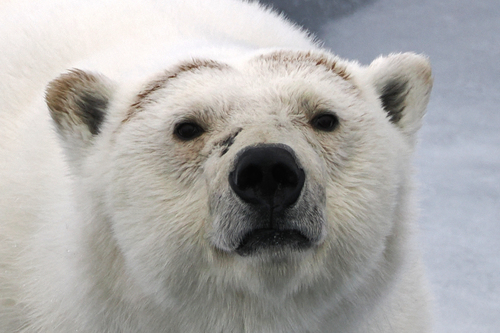

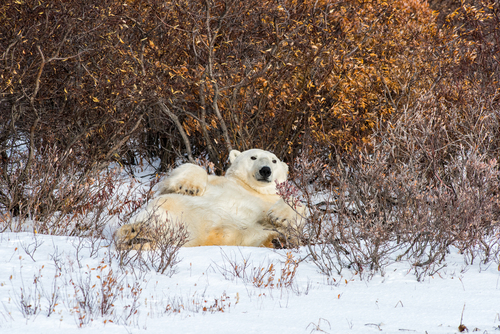
SIGHTINGS
Where it has been recorded


CONSERVATION TIMELINE
How it came to be protected
- 1956Soviet hunting banThe Soviet Union banned all hunting of polar bears.Source: Wikipedia
- 1972Protected in the USThe United States adopted the Marine Mammal Protection Act, which covers the polar bear.Source: Wikipedia
- 1973Five-nation agreement signedCanada, Denmark, Norway, the Soviet Union and the United States signed the Agreement on the Conservation of Polar Bears in Oslo.Source: Wikipedia
- 1991Special Concern in CanadaCanada moved the polar bear from Not at Risk to Special Concern in April 1991.Source: Wikipedia
- 2000Russia and US quota pactRussia and the United States signed an agreement to jointly set quotas for the polar bears they share.Source: Wikipedia
- 2008Listed as ThreatenedThe US Fish and Wildlife Service listed the polar bear as threatened under the Endangered Species Act, effective 15 May 2008.Source: Federal Register
- 2015Listed as VulnerableThe IUCN Red List categorised the polar bear as Vulnerable, citing decline in the area and quality of its habitat.Source: Wikipedia
- 2015Circumpolar action planThe five polar bear range states agreed a circumpolar action plan in September 2015.Source: Wikipedia
QUIZ
Test yourself
How far was the longest tracked swim by a polar bear, a 9-day nonstop trip in 2008?
What colour is a polar bear's skin under its fur?
About how much does a newborn polar bear cub weigh?
SPECIES PROFILES
All 28 species profiles →More species profiles
BIRDS · HUMMINGBIRDSHummingbirdHovering, torpor, 366 speciesMAMMALS · MARSUPIALSKangarooHopping, pouch, mobsMAMMALS · SLOTHSSlothSlowness, fur, seven speciesMARINE LIFE · SEA TURTLESGreen sea turtleNavigation, grazing, recoveryMAMMALS · UNGULATESGiraffeNeck, blood pressure, speciesBIRDS · RAPTORSBald eagleNests, piracy, recoveryPETS · DOGSDomestic dogOrigins, nose, mind, breedsREPTILES · CROCODILIANSSaltwater crocodileBite, sea travel, recoveryPETS · CATSDomestic catDomestication, senses, purringEXTINCT · DINOSAURSTyrannosaurus rexBite, growth, extinctionREPTILES · MONITORSKomodo dragonVenom, iron teeth, islandsMARINE LIFE · WHALESBlue whaleSize, krill, song
All polar bear articles
12 articlesBearsProfile · Apr 17, 2026Polar Bears: A Tracked 687 km Swim
BearsIn depth · Apr 24, 2026Polar Bear Endangerment: The 2050 Forecast
BearsIn depth · Apr 23, 2026Polar Bear Diet: What They Eat and How They Hunt
BearsIn depth · Apr 22, 2026Why Polar Bears Are Marine Mammals
BearsIn depth · Apr 21, 2026Where Do Polar Bears Live? 19 Subpopulations
BearsIn depth · Apr 20, 2026Polar Bear Fur: Clear Hair, Black Skin
BearsIn depth · Apr 19, 2026Polar Bear Cubs: Born at About 600 Grams
BearsIn depth · Jan 20, 2026Polar Bear: Swims 154 km in 3.4 Days
BearsMatchup · Dec 22, 2025Polar Bear vs Grizzly Bear: Pizzly Hybrids
BearsIn depth · Dec 18, 2024How Long Do Polar Bears Live? Lifespan
BearsIn depth · Dec 17, 2024Polar Bear Speed: Bursts of About 40 km/h
BearsIn depth · Dec 16, 2024Are Polar Bears Dangerous? Often Predatory