Bornean Pygmy Elephant: Asia's Smallest
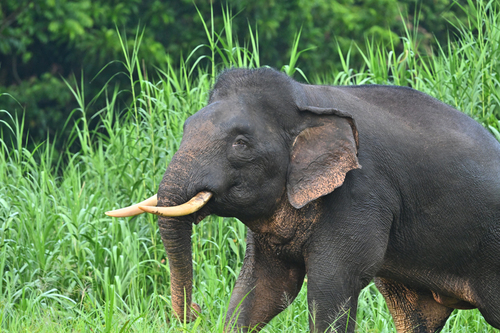
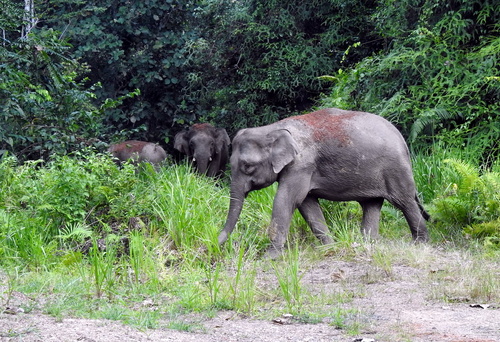
Elephas maximus borneensisAbout 1,000 Bornean pygmy elephants remain, and a 2003 DNA study showed they evolved on Borneo for some 300,000 years. They have oversized ears.
 Strange Animals EditorialFebruary 8, 2025·13 min read·Editorial standards ↗
The Bornean pygmy elephant is the smallest, rarest and arguably the gentlest elephant in Asia. It is a distinct subspecies of the Asian elephant, Elephas maximus , confined almost entirely to the forests of northeastern Borneo, mostly within the Malaysian state of Sabah. With an estimated 1,000 individuals remaining in the wild, the Bornean pygmy elephant is one of the smallest viable elephant populations in the wild.
Its small size, oversized ears, baby-faced head and long dragging tail give it an appearance so unusual that for decades zoologists argued about whether it was even a real subspecies or just a stunted mainland herd with a good origin story.
All major dimensions of Bornean pygmy elephant biology and conservation appear in this guide: size and anatomy, the disputed origins of their presence in Borneo, the 2003 genetic study that resolved much of the controversy, what they eat, how they organize socially, the Kinabatangan River corridor that harbors the remaining population and the oil palm industry dynamic that affects their daily existence.
Etymology and Classification
The scientific name Elephas maximus borneensis was described by Deraniyagala in 1950, and the 2003 genetic study by Fernando et al. showed that Borneo's elephants are a distinct evolutionary lineage. Before that the Borneo population was often grouped with the Sumatran subspecies ( E. m. sumatranus ) or lumped within E. m. indicus , depending on the authority.
The name borneensis simply means 'of Borneo' and reflects the subspecies' almost complete geographic restriction to northeastern Borneo.
The common name 'pygmy elephant' is older and more disputed than the scientific one. The 'pygmy' label stuck in popular writing, although measurements show that adult elephants in Sabah are similar in height to those of Peninsular Malaysia.
In Malay the animal is called gajah Borneo or gajah kerdil ('dwarf elephant'). Local Dusun, Kadazan and Orang Sungai communities along the Kinabatangan River have their own names and a long tradition of ecological knowledge about elephant movements.
The Royal Gift Origin Theory
For decades the dominant popular explanation for how elephants came to Borneo was a story about the Sultan of Sulu. According to some accounts, the Sultan introduced captive elephants to Borneo in the 18th century, with one account giving 1750 and the East India Company as the source of the gift. The Sultan's domain straddled what is now the southern Philippines and northeastern Borneo.
The animals were allegedly released into the forests of what is now Sabah and became the founder population of today's pygmy elephants.
The royal gift theory was compelling for several reasons. There is no archaeological evidence of long-term elephant habitation in Borneo, which looked consistent with a recent introduction. The population was restricted to the northeastern corner of the island, where a Sulu release would have occurred. The genetic base appeared narrow, consistent with a small founder event. And the animals' small size could be explained as island dwarfism over a few centuries of selection under Borneo's nutrient-poor conditions.
The 2003 genetic study destroyed much of this narrative. Mitochondrial DNA and microsatellite analysis indicated that Borneo's elephants are derived from Sundaic stock and have undergone independent local evolution for some 300,000 years since a Pleistocene colonization. That is far older than any historical gift.
Most biologists now accept that elephants reached Borneo during the Pleistocene, when land bridges connected the Sunda shelf, and were possibly isolated when those land bridges disappeared after the Last Glacial Maximum about 18,000 years ago.
The royal gift theory has not wholly disappeared from consideration. A few historians and biologists maintain that the genetic distance might instead show a bottleneck from a tiny founder group and that the Sultan's gift could still explain where the founders originated, although not when they arrived. The prevailing view holds that Borneo's elephants have occupied the island for hundreds of thousands of years and if the Sultan's gift existed at all, it was a footnote rather than a founding event.
Size and Physical Description
Bornean pygmy elephants represent the smallest elephants found in Asia. Adult sizes vary widely, and although the difference from mainland Asian elephants is real, it is smaller than popular writing often implies, yet it becomes apparent at a glance once you know what to look for.
Adult males:
- Shoulder height: 1.7-2.6 metres, with large bulls reaching about 2.5 metres
- Tusk length: 0.5-1.7 metres
- Ear length: proportionally larger than other Asian elephants
Adult females:
- Shoulder height: 1.5-2.2 metres
- Often carry small tusks called tushes rather than full tusks
Adults average about 2,500 kg. For comparison, the IUCN gives about 2.5 metres at the shoulder for Bornean bulls against about 3 metres for bulls on the mainland, and Guinness World Records describes the Borneo elephant as about 30 per cent smaller than other Asian elephants.
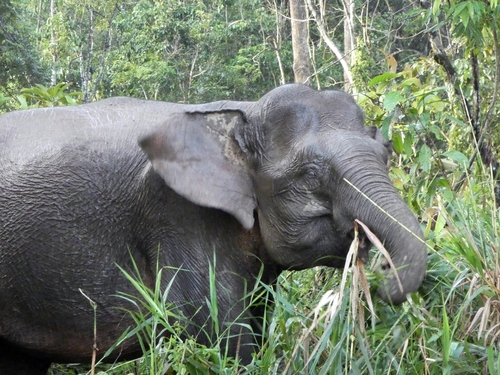
Beyond raw size, several anatomical features distinguish the subspecies. The ears are proportionally larger, sometimes comically so in photographs, giving adults a juvenile appearance. The tail is long enough that it sometimes touches the ground as the elephant walks, a feature almost never seen in mainland Asian elephants. The back is straighter and the rump rounder, producing a shorter, stockier silhouette.
The skull is more rounded, which combines with the oversized ears and chubby cheeks to produce what is often described as a 'baby-faced' look that persists into adulthood.
Tusks are generally smaller and straighter than in mainland elephants. Females often carry short tushes that rarely emerge past the lip line. This reduced tusk development may reflect either genuine subspecies difference or the selective pressure of historical ivory hunting, or both.
Temperament: The Gentle Elephants
WWF describes Bornean elephants as gentle-natured, and they are widely described as more docile than mainland Asian elephants. This is not a formal scientific classification (temperament is notoriously hard to quantify across species), but it is a widely repeated observation.
Why might this be? Several hypotheses exist:
- Predator-poor evolution. Borneo has no tigers, no leopards, no lions and no hyenas. Hundreds of thousands of years without serious predator pressure may have reduced selection for aggressive defensive behaviour.
- Low historical human-elephant conflict. Mainland Asian elephants have coexisted with dense human agricultural populations, war elephants, timber-logging work and capture-for-taming for millennia. Borneo's population, restricted to an area of lower historical human density, faced much less of that selective pressure.
- Small population genetic drift. In a founder population, particular temperament traits can fix through chance alone regardless of selection.
The gentleness claim is important beyond curiosity: it matters for conservation. Bornean pygmy elephants are more tolerant of humans than mainland populations but that tolerance also makes them more vulnerable, because herds that would run from armed plantation workers elsewhere in Asia will sometimes linger in Borneo and be poisoned or shot.
Habitat and Range
The Bornean pygmy elephant is almost entirely restricted to the northeastern third of Borneo. The core range sits within the Malaysian state of Sabah, with a small and poorly surveyed population extending into northern Kalimantan in Indonesia. Key habitats include:
| Landscape | Role for elephants |
|---|---|
| Kinabatangan floodplain | Major migration corridor and managed elephant range |
| Danum Valley | Part of the Central Sabah managed elephant range |
| Tabin Wildlife Reserve | Protected population stronghold |
| Ulu Segama | Highest elephant density recorded in the 2007-2008 Sabah survey |
| Northern Kalimantan | Small, poorly monitored population |
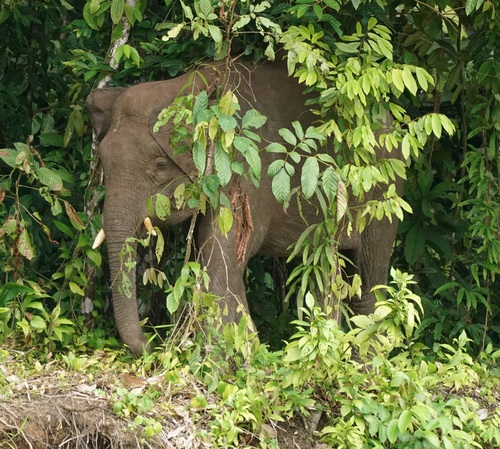
Preferred habitat is lowland dipterocarp forest and secondary regrowth with easy access to rivers and floodplain grass. Some herds also use hilly interior dipterocarp forest at about 300 to 1,500 metres elevation.
The Kinabatangan River corridor deserves special mention. It is a ribbon of protected and partially protected forest following the Kinabatangan River, which is about 560 kilometres long, surrounded on almost every side by oil palm plantation. Many of Sabah's pygmy elephants depend on this corridor for seasonal movement, water and connection between the larger forest blocks.
The corridor is narrow enough in places that a single plantation expansion can sever an elephant migration route for decades.
Diet and Feeding Ecology
Bornean pygmy elephants are generalist herbivores with an enormous daily appetite. Asian elephants as a species eat about 74 to 150 kilograms of food a day. The diet is highly varied and reflects whatever forest produces at a given season.
Primary food categories:
- Wild figs, bananas and rainforest fruits
- Palm hearts and young palm fronds
- Bamboo shoots and mature culms
- Riverine grasses and sedges
- Bark and twigs from dipterocarp trees and fig species
- Water hyacinth and other aquatic vegetation
- Cultivated oil palm where accessible
Asian elephants spend about three-quarters of each day eating or moving toward food or water. Elephants break branches, strip bark, pull up grasses with the trunk and occasionally push down small trees to access crown foliage. Wild Asian elephants drink about 189 litres of water a day.
The growing proportion of cultivated oil palm in the diet is a major driver of conflict. Young oil palm contains a soft, nutritious heart that elephants consume readily. For smallholder farmers this represents a serious loss, and the economic pressure drives the retaliation killings that continue to erode the population.
Social Structure and Reproduction
Like other Asian elephants, Bornean pygmy elephants live in small herds of related females, their female offspring and immature males. Males leave the family group at puberty, between about 8 and 13 years of age and spend most of their lives solitary or in loose bull groups, joining herds temporarily for mating.
Reproductive parameters (Asian elephant figures from Smithsonian's National Zoo):
| Metric | Value |
|---|---|
| Sexual maturity | 8-13 years |
| Gestation | 21.5-22 months |
| Calves per birth | 1 (twins extremely rare) |
| Interbirth interval | 3-8 years, depending on conditions |
| Calf weight at birth | 68-158 kg |
Reproduction is slow enough that any significant loss of breeding-age females represents a demographic disaster for a population this small. A single herd wiped out in a poisoning event can knock multiple years of future recruitment out of the regional population.
Conservation Status and Threats
The IUCN lists the Asian elephant as Endangered, and in June 2024 it assessed the Bornean elephant as a distinct subspecies for the first time, also listing it as Endangered. That assessment estimates about 1,000 Bornean elephants remaining in the wild, overwhelmingly concentrated in Sabah. This is one of the smallest elephant populations on Earth.
Primary threats:
- Habitat loss from oil palm. About 60 per cent of the Bornean elephants' forest habitat has been lost in the last 40 years, primarily to logging and commercial oil palm planting. Much of the remaining elephant range consists of narrow forest strips bordered by plantations on multiple sides.
- Human-elephant conflict. Snaring, shooting and other conflict-related causes kill elephants in Sabah. Sabah recorded 116 elephant deaths from all causes, including snare traps, lack of food and disease, between October 2010 and September 2018, with 30 recorded in 2018 up to September, a heavy toll.
- Habitat fragmentation. Plantation, roads and settlement have cut through the forest corridors that once linked larger habitat blocks. Isolated sub-populations that remain face heightened risk of genetic bottleneck and local extinction.
- Small-population genetic risk. A population of about 400 breeding adults is small enough that inbreeding depression and loss of genetic diversity are measurable concerns over the next several generations.
- Poaching for ivory. Less severe than in African elephants because tusks are small and few, but some poaching does occur.
- Climate change. Shifts in monsoon patterns and an increase in catastrophic flooding along the Kinabatangan have the potential to stress populations and alter migration patterns.
Conservation responses:
The Kinabatangan Wildlife Sanctuary was gazetted in 2009 to protect the lower river floodplain.
Both the Malaysian and Indonesian governments have action plans for the conservation of Borneo's elephants, and the IUCN calls for wildlife corridors through the plantations to join forest patches.
Bornean Pygmy Elephants and People
Local communities along the Kinabatangan have coexisted with pygmy elephants for generations. Dusun, Kadazan and Orang Sungai traditions include specific elephant knowledge (migration timing, preferred feeding areas, how to defend crops without killing the animals).
The relationship has always included both reverence and frustration, because elephants in a village garden are a genuine economic threat no matter how much cultural goodwill exists toward them.
Modern wildlife tourism along the Kinabatangan has created economic incentive for conservation. Boat tours from Sukau carry visitors past herds feeding on riverbanks, and elephant sightings are one of the region's main draws. Well-managed tourism provides income that offsets the lost opportunity cost of not converting corridor land to plantation. Poorly managed tourism habituates herds to human presence in ways that can eventually increase conflict.
This animal sits at the nexus of some of the 21st century's most urgent environmental questions: tropical forest decline, the global palm oil industry, the ethics of introduced versus native species and the preservation of narrow evolutionary lineages.
Its survival or loss will be determined by decisions made in Sabah's Ministry of Tourism, Culture and Environment, in palm oil corporate boardrooms and in the consumer markets that buy the palm oil that drives the plantations.
Frequently asked questions
Adult male Bornean pygmy elephants (Elephas maximus borneensis) stand 1.7 to 2.6 metres at the shoulder, with large bulls reaching about 2.5 metres, and adults average about 2,500 kilograms. The IUCN gives about 2.5 metres at the shoulder for Bornean bulls against about 3 metres for mainland bulls, and Guinness World Records describes the Borneo elephant as about 30 per cent smaller than other Asian elephants. Asian elephant calves weigh 68 to 158 kilograms at birth.
Beyond raw size, the subspecies has proportionally larger ears, a rounder rump, a straighter back and a long tail, a combination that gives adults a baby-faced appearance.
Bornean pygmy elephants inhabit the northeastern corner of Borneo, almost entirely within the Malaysian state of Sabah, with a small, poorly surveyed population extending into northern Kalimantan in Indonesia. Their range is concentrated along the Kinabatangan River floodplain, the Danum Valley area, the Tabin Wildlife Reserve, Ulu Segama and the forest corridors connecting these areas.
They prefer lowland dipterocarp forest and secondary regrowth, with easy access to rivers and floodplain grass, and some herds use hilly interior forest at about 300 to 1,500 metres. The Kinabatangan River corridor, a ribbon of forest surrounded on almost every side by oil palm plantation, is a major landscape for the subspecies.
The name refers to their smaller size compared to other Asian elephant populations, although measurements show that adult elephants in Sabah are similar in height to those of Peninsular Malaysia. The ‘pygmy’ label stuck in popular writing.
The 2003 genetic study by Fernando et al. showed that Bornean elephants are a distinct evolutionary lineage. The subspecies name Elephas maximus borneensis was described by Deraniyagala in 1950.
A long-standing hypothesis holds that the current population descends from captive elephants introduced by the Sultan of Sulu, thought to date to the 18th century, which were later released into the forests of what is now Sabah. The lack of archaeological evidence of long-term elephant habitation in Borneo and the population’s restriction to the northeastern corner of the island supported the idea for years.
The 2003 genetic study delivered a strong counter-argument: DNA analysis indicated that Borneo’s elephants derive from Sundaic stock and have evolved independently for some 300,000 years, far older than any historical gift. Most biologists now accept that elephants reached Borneo during the Pleistocene over land bridges. The royal gift, if it happened at all, was a footnote rather than a founding event.
Yes. The IUCN lists the Asian elephant as Endangered, and in June 2024 it assessed the Bornean elephant as a distinct subspecies for the first time, also listing it as Endangered. That assessment estimates about 1,000 Bornean elephants remaining in the wild, with about 400 breeding adults, overwhelmingly in Sabah. The main threats are habitat loss from logging and oil palm plantation expansion, fragmentation of forest corridors, human-elephant conflict and small-population genetic risks.
Both the Malaysian and Indonesian governments have action plans for Borneo’s elephants, but losses remain heavy: Sabah recorded 116 elephant deaths from all causes between October 2010 and September 2018, with 30 in 2018 up to September.
They are generalist herbivores with an enormous appetite: Asian elephants as a species eat about 74 to 150 kilograms of food a day. The diet includes wild figs, bananas and other rainforest fruits, palm hearts and young palm fronds, bamboo shoots and mature culms, riverine grasses and sedges, bark and twigs from dipterocarp and fig trees, water hyacinth, and cultivated oil palm where forests border plantations.
Their appetite for young oil palm is a major driver of human-elephant conflict in Sabah.
WWF describes Bornean elephants as gentle-natured, and they are widely described as more docile than mainland Asian elephants. Temperament is notoriously hard to quantify, so this is not a formal scientific classification, but it is a widely repeated observation.
Several hypotheses explain it. Borneo has no tigers, lions, or hyenas, so hundreds of thousands of years without serious predator pressure may have reduced selection for aggressive defence. Borneo’s elephants also faced far less of the capture, taming, logging work and warfare that shaped mainland Asian elephants over millennia. Genetic drift in a small founder population may also have fixed calmer traits by chance.
Oil palm expansion is a major driver of pygmy elephant decline. The IUCN reports that about 60 per cent of the Bornean elephants’ forest habitat has been lost in the last 40 years, primarily to logging and commercial oil palm planting. This has three compounding effects. First, habitat loss shrinks the forest base that can support elephant herds.
Second, fragmentation severs the corridors between forest blocks, leaving isolated groups at elevated risk of genetic bottleneck and local extinction. Third, direct conflict follows: elephants eat young palms, and snaring and shooting kill elephants in Sabah.
The IUCN calls for wildlife corridors through the plantations to join forest patches and allow elephants to roam more widely.
References
- Population figures reflect the most recent consolidated estimates for the Sabah population supplemented by limited survey data from northern Kalimantan.
- IUCN (2024). Borneo elephants now classified Endangered on IUCN Red List. View source
- Guinness World Records. Smallest elephant (species). View source
- WWF. Borneo pygmy elephant species profile. View source
- Smithsonian's National Zoo and Conservation Biology Institute. Asian elephant. View source
- Free Malaysia Today (22 October 2018). Sabah sets up joint task force to protect elephant population. View source