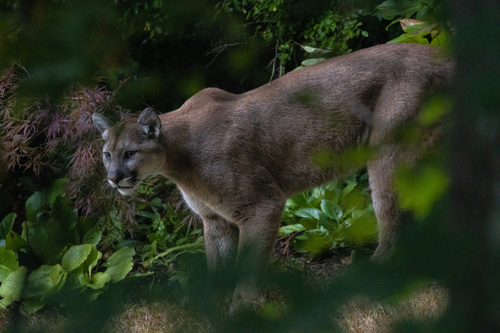
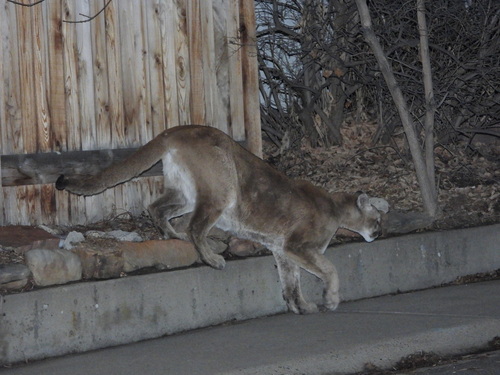
Mountain Lion: The Animal With 40+ Names
Puma concolorMountain lions hold a Guinness record for the most names of any animal, and range over about 110 degrees of latitude, from the Yukon to the southern Andes.
 Strange Animals EditorialDecember 27, 2024·15 min read·Editorial standards ↗
The mountain lion is the most widely distributed wild cat in the Americas and the mammal with the most common names in the English language. A single species, Puma concolor , ranges from the Yukon in northwestern Canada to the southern tip of Patagonia, occupying more habitats and more latitudes than any other native land mammal in the western hemisphere.
Across that range it is called cougar, puma, panther, catamount, ghost cat, painter, mountain screamer and at least thirty other regional names, all for the same tawny, long-tailed, solitary predator.
This guide covers every major aspect of mountain lion biology and ecology: taxonomy, size, habitat, hunting and diet, reproduction, territory and movement, conservation, subspecies, the famous cats of Los Angeles and Florida, and the uncomfortable fact that this is not actually a "big cat" at all.
Etymology and Classification
The scientific name Puma concolor was established by Carl Linnaeus in 1771. Concolor is Latin for "of one colour", a direct reference to the cat's uniformly tawny coat, one of the few large cats without spots, stripes, or rosettes as an adult. Cubs are spotted, and the markings fade as they mature.
The mountain lion holds a Guinness World Record for the most names of any animal.
More than 40 regional English names exist, including cougar (from the Tupi Indigenous word susuarana via Portuguese and French), puma (from Quechua), panther (a catch-all formerly applied to any solid-coloured large cat), catamount (a contraction of "cat of the mountain"), painter (a dialect variant of "panther", used mostly in the southern United States), mountain screamer (referring to the female's oestrous call), and ghost cat (a nod to how rarely one is ever seen).
Many more names exist in Spanish, Portuguese and Indigenous American languages, all referring to the same species.
Taxonomically the mountain lion belongs to:
- Kingdom: Animalia
- Phylum: Chordata
- Class: Mammalia
- Order: Carnivora
- Family: Felidae
- Subfamily: Felinae
- Genus: Puma
- Species: P. concolor
That subfamily assignment is critical. Despite being the fourth-largest cat in the world, the mountain lion is not a "big cat" in the technical sense. True big cats belong to the subfamily Pantherinae and the genus Panthera : lions, tigers, leopards, jaguars and snow leopards. The mountain lion sits in Felinae alongside domestic cats, lynx, bobcats, ocelots and the cheetah.
The consequences are physical and audible. A mountain lion cannot roar, it lacks the specialised flexible hyoid bone and elongated vocal folds that give Panthera cats their thunderous roar. A mountain lion can purr continuously on both inhalation and exhalation, exactly like a house cat. It also screams, hisses, growls, chirps and whistles.
Size and Physical Description
Mountain lions are large, powerful, elongated cats built for ambush, short bursts of explosive speed and extraordinary leaping. Size varies across the range, with the largest individuals found in temperate latitudes (western North America and Patagonia) and smaller cats near the equator.
Males:
- Length: around 2.4 metres (nose to tail tip)
- Tail length: 63-95 cm
- Shoulder height: 60-90 cm
- Weight: generally 53-72 kg, up to about 120 kg, the largest reliably recorded cougar, shot in 1901, weighed 105.2 kg (claims of 125 kg are probably exaggerated)
Females:
- Length: averaging about 2.05 metres
- Weight: generally 34-48 kg
Cubs at birth:
- Born blind and spotted
The mountain lion's body is proportioned for leaping rather than endurance running. The hind legs are the longest, proportionally, of any cat in the family Felidae. The shoulders and hips are powerful and muscular, the chest is deep, the head is comparatively small with a short, rounded muzzle. The tail is long, thick and black-tipped, acting as a counterweight during high-speed turns and long leaps.
Adult coat colour is uniform, ranging from grey-brown in northern and high-elevation populations to rich reddish-tawny in the tropics and swamp habitats of Florida. The undersides, throat and insides of the legs are pale cream or white. The muzzle carries distinctive black markings at the lip line and nose, and the backs of the ears are dark.
Despite persistent folklore, no verified black mountain lion has ever been documented, true melanism has never been confirmed in Puma concolor , and "black panther" sightings in the Americas almost always refer to melanistic jaguars or leopards.
Range and Habitat
The mountain lion's geographic distribution is the broadest of any wild cat in the western hemisphere. From north to south it spans about 110 degrees of latitude, from the Yukon to the southern Andes in Chile. No other native land mammal in the Americas matches this range.
Habitats occupied:
- Boreal and temperate coniferous forest
- Temperate deciduous forest
- Rocky mountain terrain up to 5,800 m
- Desert and semi-desert (Sonoran, Chihuahuan, Patagonian steppe)
- Subtropical and tropical rainforest (Central and South America)
- Swamps and cypress forest (Florida Everglades)
- Grasslands and savanna edges
Mountain lions thrive wherever cover is adequate, ungulate prey is present and persecution pressure is low. They avoid continuous open terrain with no cover and dense human development, but they will cross both when necessary.
The species was once found across the entire Americas, including the eastern United States. Intensive hunting following European colonisation eliminated the eastern population by the early 20th century, with the exception of the isolated Florida panther subpopulation.
Mountain lions are recolonising parts of the midwestern United States and Canada, and isolated individuals have been documented east of the contemporary range. A small breeding population has been re-established in the Great Lakes region around Voyageurs National Park and the Upper Peninsula of Michigan.
Hunting and Diet
Mountain lions are obligate carnivores and ambush specialists. Their hunting style defines their entire body plan.
Primary prey:
- White-tailed deer and mule deer, dominant in North America
- Elk (usually calves, sometimes adult cows)
- Bighorn sheep and mountain goats
- Guanaco and vicuna in South America
Secondary prey:
- Porcupine, raccoon, beaver
- Coyote
- Rabbits and hares
- Ground squirrels and marmots
- Armadillos (Florida, Central America)
- Domestic livestock, sheep, goats, calves, horses
A survey of North American research found that 68% of prey items were ungulates, especially deer. Kills are generally estimated at around one large ungulate every two weeks. Females with cubs kill more frequently because growing cubs require rapidly increasing quantities of meat.
Hunting technique:
- Stalk. The cat approaches through cover, moving only when the prey's head is down. Mountain lions use terrain, vegetation and darkness.
- Pounce. The cat explodes from cover in a short burst and leaps onto the back of its prey.
- Neck bite. Mountain lions kill large prey by biting the back of the neck, severing the spinal cord between the vertebrae with their elongated canines. Smaller prey is killed with a throat bite that crushes the trachea.
- Drag and cache. After the kill the cat drags the carcass to a preferred spot, then covers it with brush. The cat returns over several days to feed.
Hunting success varies by prey and habitat: in central Idaho the success rate was estimated at 82% when hunting elk and mule deer in winter snow, while in central Argentina it was about 10% when hunting plains viscacha.
Life Cycle and Reproduction
Mountain lion reproduction is not seasonal at most latitudes, females come into oestrus throughout the year, though a mild peak occurs in spring. In northern populations births concentrate in late spring and summer to give cubs the best chance of surviving their first winter.
Mating:
- Females advertise receptivity with the famous "mountain screamer" call.
- Across large territories, males follow females by scent and call.
- Copulation is brief but frequent.
- Multiple partners are available to both sexes for mating, and a single litter can have more than one father.
Gestation and birth:
- Gestation: approximately 91 days
- Litter size: 1-6 cubs, typically 2
- Den: caves and other protected alcoves
Cubs are born blind, spotted and with ringed tails, and are completely dependent on their mother at first. They begin to be weaned at around three months and begin hunting small prey on their own after about six months.
Mountain lion cubs rely completely on their mother for care. Male mountain lions do not contribute to rearing the young and may kill cubs when the mother returns to oestrus. Female mountain lions defend their cubs fiercely.
Independence and dispersal:
- Cubs stay with the mother for 18-24 months
- Females often settle near their natal range
- Males tend to disperse further than females to establish territory
This male dispersal is how the species recolonises former range.
Territory and Movement
Mountain lions are fiercely territorial and solitary. Adults outside the mother-cub relationship interact only to mate or to fight. Territories are maintained by scent marking (scraping, urine, faeces), occasional vocalisation and direct confrontation.
Territory sizes:
- Male: large home ranges of roughly 150-1,000 km^2
- Female: ranges about half the size of male ranges
- Males' territories overlap with multiple female territories but not with other adult males.
Territory size varies with terrain, vegetation and prey abundance.
Subspecies
The subspecies taxonomy of Puma concolor has been completely rewritten within the last two decades. Historically, museum specimens were described as belonging to as many as 32 subspecies based on regional differences in fur colour, skull dimensions and geographic origin. Modern molecular genetics has overturned most of those distinctions.
Since 2017 the IUCN Cat Specialist Group's Cat Classification Task Force has recognised only two valid subspecies:
- Puma concolor couguar : North and Central America, and possibly northwestern South America
- Puma concolor concolor : South America, possibly excluding the region northwest of the Andes
Under this revision, every mountain lion in North America belongs to a single subspecies. This is significant for conservation. The Florida panther, once considered its own distinct subspecies ( P. c. coryi ), is now classified as part of the same North American lineage as the cats in Colorado and British Columbia.
The Florida Panther
The Florida panther is the only mountain lion population to have survived in the eastern United States. Before the mid-1990s the wild population had fallen to about 20 individuals in southern Florida. Inbreeding had produced severe physical defects: kinked tails, heart defects and undescended testes.
In the mid-1990s, eight pumas from Texas were introduced into Florida panther habitat to increase genetic diversity. The Texas cats belonged to what was then considered a neighbouring subspecies and is now understood to belong to the same North American lineage.
The introduction worked. The Texas pumas interbred with the Florida panthers, and the survival rate of hybrid kittens was three times higher than that of purebred Florida panthers. Kinked tails and heart defects dropped in frequency. Cub survival climbed. The population grew from about 20 cats to an estimated 120 to 230 individuals.
The Florida panther is still federally Endangered and still faces severe threats: vehicle collisions are the leading cause of individual mortality, and habitat loss continues.
P-22 and the Urban Mountain Lion
Mountain lions are rarely seen, but one individual became internationally famous. P-22 was a male mountain lion born around 2010 in the Santa Monica Mountains of California.
As a young dispersing male, he crossed US Highway 101 and then Interstate 405 and took up residence in Griffith Park, an urban park inside the city of Los Angeles.
P-22 was repeatedly photographed by a remote camera trap, most famously with the Hollywood sign in the background. He survived rat poison exposure, mange, traffic and the constant presence of millions of humans. His story drove a successful campaign for the construction of the Wallis Annenberg Wildlife Crossing over Highway 101.
In December 2022, P-22 was euthanised following serious injuries from a vehicle collision. He reshaped how people across the American west see urban wildlife and the importance of connected habitats.
Conservation Status
The IUCN Red List classifies Puma concolor as Least Concern at the species level,. This designation reflects the species' enormous geographic distribution rather than universal health.
Regional concerns:
- Florida panther. Endangered, an estimated 120 to 230 individuals
- Eastern cougar. Considered locally extinct in eastern North America since the early 20th century
- Central America. Declining due to habitat fragmentation
- Patagonia. Regionally threatened by livestock retaliation
Primary threats:
- Habitat loss and fragmentation. Road networks, suburban sprawl and agricultural conversion reduce usable habitat and sever dispersal corridors.
- Vehicle collisions. The largest single source of mortality for Florida panthers and a significant cause of death in urban-adjacent populations.
- Retaliatory killing. Livestock producers across both Americas kill mountain lions believed to have attacked cattle, sheep, or goats.
- Legal sport hunting. Several US states and Canadian provinces permit mountain lion hunting. Quota-based management has been generally stable, though not without controversy.
- Genetic isolation. Small populations cut off from the main range (Florida, isolated mountain ranges in the southwest) suffer inbreeding depression.
- Rodenticides. Mountain lions in peri-urban landscapes accumulate anticoagulant rat poisons through prey, causing immune suppression and death.
Protected area networks, wildlife crossings, scientifically managed hunting quotas, genetic rescue programmes, public education and livestock compensation schemes are the conservation tools in use. Puma concolor species survival is secure over the long term, though multiple subpopulations need active management.
Mountain Lions and Humans
Mountain lion attacks on humans are statistically rare. By 2004, about 88 attacks and 20 deaths had been recorded in North America since 1890. Children are at greatest risk: one study of attacks before 1991 found that 64% of victims, and almost all fatalities, were children.
Standard safety guidance in mountain lion country includes:
- Travel in groups where possible
- Keep children close and within sight
- Make yourself appear as large as possible during an encounter
- Maintain eye contact, do not turn your back
- Back away slowly, do not run
- Fight back aggressively if attacked, mountain lions often abandon an attack when the target resists
The "ghost cat" nickname captures the realistic picture of mountain lion and human coexistence. In areas with healthy cougar populations, the cats see humans constantly while humans almost never see cats.
Indigenous cultures across the Americas, including the Inca, Cherokee and Apache, have assigned the mountain lion symbolic roles. Many of these cultural traditions predate European contact by centuries.
Frequently asked questions
Adult male mountain lions (Puma concolor) are around 2.4 m long from nose to tail tip, and females average about 2.05 m. The tail accounts for 63-95 cm. Males generally weigh 53-72 kg, up to about 120 kg and females generally weigh 34-48 kg. Shoulder height is 60-90 cm. Size is smaller close to the equator and larger towards the poles.
The largest reliably recorded mountain lion, shot in 1901, weighed 105.2 kg. Claims of 125 kg have been reported but were probably exaggerated. The mountain lion is the fourth-largest cat species.
Genetically, no. Mountain lions belong to the subfamily Felinae, which contains the smaller cats including domestic cats, lynx, bobcats, and ocelots. True ‘big cats’ (lions, tigers, leopards, jaguars, and snow leopards) belong to the genus Panthera. Mountain lions are therefore not true lions of the genus Panthera.
The most obvious consequence is vocalisation: Panthera species can roar because of a specialised flexible hyoid bone and elongated vocal folds. Mountain lions cannot roar, but they can purr, like domestic cats. They also produce hisses, growls, chirps, and whistles, and oestrus females produce caterwauls or yowls to attract mates.
Mountain lions are ambush predators that prefer large mammals. Ungulates, particularly deer, are the primary prey: a survey of North American research found that 68% of prey items were ungulates. Prey includes white-tailed deer and mule deer in North America, and guanaco and vicuna in South America. Secondary prey includes elk, moose, bighorn sheep, mountain goats, raccoons, porcupines, beavers, hares and rodents.
Florida panthers often prefer feral hogs and armadillos. Kills are generally estimated at around one large ungulate every two weeks. Mountain lions are generally reported not to be scavengers. They drag a kill to a preferred spot, cover it with brush and return to feed over several days.
Mountain lions have the most extensive range of any wild land animal in the Americas, spanning about 110 degrees of latitude from the Yukon in Canada to the southern Andes in Chile. No other wild land animal in the western hemisphere has a range this large.
They occupy almost every habitat available: boreal forest, temperate forest, rocky mountains up to 5,800 m, deserts, swamps and grasslands. The eastern North American population was eliminated by the early 20th century except for the Florida panther, but mountain lions are recolonising parts of the midwestern United States and Canada, and isolated individuals have been documented east of the contemporary range.
The IUCN classifies Puma concolor as Least Concern at the species level. This reflects the species’ enormous range rather than local abundance. Several populations are in serious trouble. The Florida panther is federally Endangered in the United States, with an estimated 120 to 230 individuals in a single population in southern Florida.
The eastern cougar population is considered mostly locally extinct since the early 20th century, apart from the Florida panther. Primary threats include habitat loss and fragmentation, vehicle collisions, conflict with livestock producers, legal hunting in the western United States, and genetic isolation of small populations. Wildlife corridors and protecting sufficient range are considered critical for the species’ persistence.
Life expectancy in the wild is reported at 8 to 13 years and probably averages 8 to 10. A female of at least 18 years was reported killed by hunters on Vancouver Island. Causes of death in the wild include disability and disease, competition with other mountain lions, starvation, accidents, and, where allowed, hunting. In captivity mountain lions may live as long as 20 years.
Females reach sexual maturity between 18 months and three years of age. Litters are one to six cubs, typically two and kitten survival is just over one per litter.
The mountain lion holds the Guinness record for the animal with the greatest number of names, with more than 40 in English alone, plus many more in Spanish, Portuguese and Indigenous languages.
Common English names include cougar (from a Tupi word via Portuguese and French), puma (from Quechua), mountain lion, panther, catamount (a shortening of ‘cat of the mountain’), painter (a dialect variant of ‘panther’ used mostly in the southern United States), ghost cat and mountain screamer. In the United States the name mountain lion is commonly used, in Canada cougar is most common and puma is used in Latin America and most of Europe. All refer to Puma concolor.
Mountain lion attacks on humans are very rare. By 2004, about 88 attacks and 20 deaths had been recorded in North America since 1890. Children are at greatest risk: one study of attacks before 1991 found that 64% of victims, and almost all fatalities, were children.
Standard safety advice is to keep children close in cougar country, make yourself appear larger if you encounter one, maintain eye contact, back away slowly and fight back if attacked. Fighting back is often effective in persuading an attacking mountain lion to disengage. The ‘ghost cat’ nickname reflects the reality that the vast majority of hikers will never see the mountain lions that live near them.